There I was flipping though the latest issue of a Men’s Fitness magazine when I saw a recipe combining my two favorite things, Bourbon and Nuts. Unfortunately there wasn’t a link available so I decided to create one myself.
It was a planter’s nuts advertisement in the latest edition(October 2020) of Men’s Health, the Survival Snack advertisement if you want to find it, that caught my attention. I’m always looking for something new to try. and this fit right up my alley.
2 1/2 cups of mixed nuts
2 Tbsp fresh chopped rosemary
1tsp bourbon
1/4 tsp cayenne pepper. (1/8 if you don’t like spicy)
2 Tbsp unsalted butter
2Tbsp brown sugar
1/2 tsp salt
Preheat oven to 325. Line a baking sheet with parchment paper. In a medium bowl combine all ingredients saving the nuts for last. Bake for 25 minutes. Let cool! and enjoy!
It’s the end of the month. Now is the perfect time to plan for the next 30 days. I had no idea what I was doing in our first budget meeting. It was way too long and way too cumbersome. I showed up to the kitchen table with PowerPoint slides and printouts of all of our transactions for the cycle. By the time we spoke about our actual budget, my wife was exhausted.
For the next meeting, I kept it simple. We discussed where we were, what was coming up, and the goals that we wanted to accomplish. My wife loved it! If my wife had questions, I still had the data available to provide a detailed answer. But, I didn’t start with the details. And that is how it has been ever since. It does mean a bit of prep work for me, but I’d prepared and analyzed the data prior to the meeting anyway. When your spouse only wants to know how much money she or he can spend, it is easy for a numbers person to get lost in the details.
So, throw away the PowerPoint slides, here are a few things that you may want to consider before sitting down for your next budget meeting.
Tips for your next budget meeting
1. How well did you execute your budget last month?
Take a look at the budget you currently have. Then take a look at your spending. Does it match your budget? If not, you may need to adjust to bring the two closer together.
2. Did you meet your financial goals last month?
If yes, then think about what goals you’d like to accomplish next month. if no, ask yourself why, and determine a course of action to meet the goal next month.
3. Do you have anything big on the horizon?
To answer this question you’ll need to sit down with a calendar. Look at the next couple of months. What’s on the agenda? Do you plan to take a trip, Birthdays, Holidays, etc. add the cost for those into your budget. This way when it is time to schedule you can simply pay for it.
4. Set Goals.
What do you want to accomplish next? Do you need to save a beginner emergency fund so you can start paying off debt? Do you need to pay off your next debt? Set a goal give it an end date, then track it until it is completed. (read more about goal setting)
5. Schedule the next meeting.
Create an appointment on your calendar for your next budget meeting. In the notes section place the goals that you have set for yourself, This way you will be able to remember what you were tracking for the next meeting.
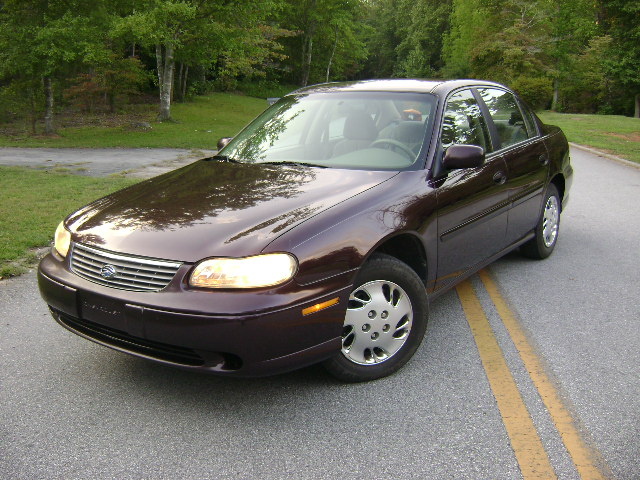
Do you remember the story of my Chevy Malibu? I think I mentioned it in my last post. Long story short, I got, got! This is what happened. First let me just say, I really loved that car. It was the first care that I bought for myself that actually work. If you asked me now, I don’t remember what was actually wrong with Mali, But I didn’t think it was going to be that big of a deal. In fact, When I bought it to the dealer based mechanic one morning before work, I was expecting to be in and out. But instead, thirty-five minutes later, the technician came out to talk to me and gave me the shock of my life.
“Mr. Stokes, So we located the problem. You have a blah, blah blah…. the part will cost about $1000, what would you like to do?” Truthfully, I really don’t remember, the part that needed replacing. I just remember the heartache I felt when he told me I wouldn’t be driving Mali home. While he was talking to me, all I remember hearing is that it would cost me $1000 to fix the problem.
Back then, I was not in a position to pay this price. I’d maxed out all of my credit cards didn’t have the cash in my bank accounts, and my credit was so poor, that I could not even get a loan to cover it. I was completely distraught. When I tried to tell him I would bring the car back when I had the money, the technician told me he, didn’t feel comfortable letting me drive the car in its current conditions. Eventually, he agreed to take my car as a down payment for a brand new 2005 Nissan Quest.
Maybe one day there will be a blog post about the Quest, but for this story. let’s focus on the fact that a $1000 problem landed me into the sensuous grasps of a $40 thousand dollar vehicle and loan. What’s more, to get my payment to stay in the same vicinity as I was making on Mali, the dealer happily extended the terms of my loan from the standard 36 months to 72 months.
Now, you probably reading this and thinking ‘this Corey guy is pretty smart’. Let’s think about it for a moment. Instead of spending $1000 to fix a problem, I ended up spending $40,000. The technician smiled that he was able to solve the problem with my Chevy Malibu… I no longer had that problem. Instead, I now had a new minivan to go with my $40,000 loan. Who was really the smart guy?
My wife and I say “we don’t long hard lessons we learn expensive ones”. I wish I could say this was the only expensive mistake that I had to learn, but it wasn’t. We, meaning I, made several more expensive mistakes before it finally sunk in. I needed to put some space between me and a hard time.
Putting space between you and a hard time gives you the mental bandwidth to think about your solution to a problem instead of taking the first option that is presented. That space gives you the freedom and the ability to respond to a problem instead of reacting to it. In short, this space gives you choices.
There are plenty of ideas about what that space should look like. But, in a nutshell, put some amount of money in an account, to handle anything that comes up. This is your baby emergency fund. I recommend $500 -$1500. Depending on where you are in your life will determine the amount of space you need.
No, I’m not saying that all you need is a $1000 emergency fund. A full emergency fund should be between three and six months of your income or your expenses. But until you get to that amount, and while you are still trying to live life, a $1000 buffer between you and a rough patch will go a long way.
If I would have had this buffer of $1000, fixing Mali would not have been a big issue. I could have simple paid for the repair. When I purchased my first home in 2006, learning from Mali was put to the test when the water heater went out. The $1000 buffer was more than enough to help me fix the problem without throwing my world through a loop.
Some would recommend having a credit card to handle these situations. personally I do not recommend this course of action. For one thing, I don’t think that debt should be used as a tool in your financial plan, therefore I do not recommend credit cards. Also, If you are trying to recession-proof your life, borrowing money is not the way to do it.
I once asked a question to my social media feed. “What would you do if you had an extra thousand dollars?” My answer is simple. I wouldn’t do anything with it. I leave it along and let it give me peace of mind. Knowing that I can handle life, as it comes up will allow me to focus on more important things; like building a full emergency fund to get more space between me and the inevitable and eventual hard time.






You must be logged in to post a comment.