Why you need a $1,000 Starter E-Fund

1000
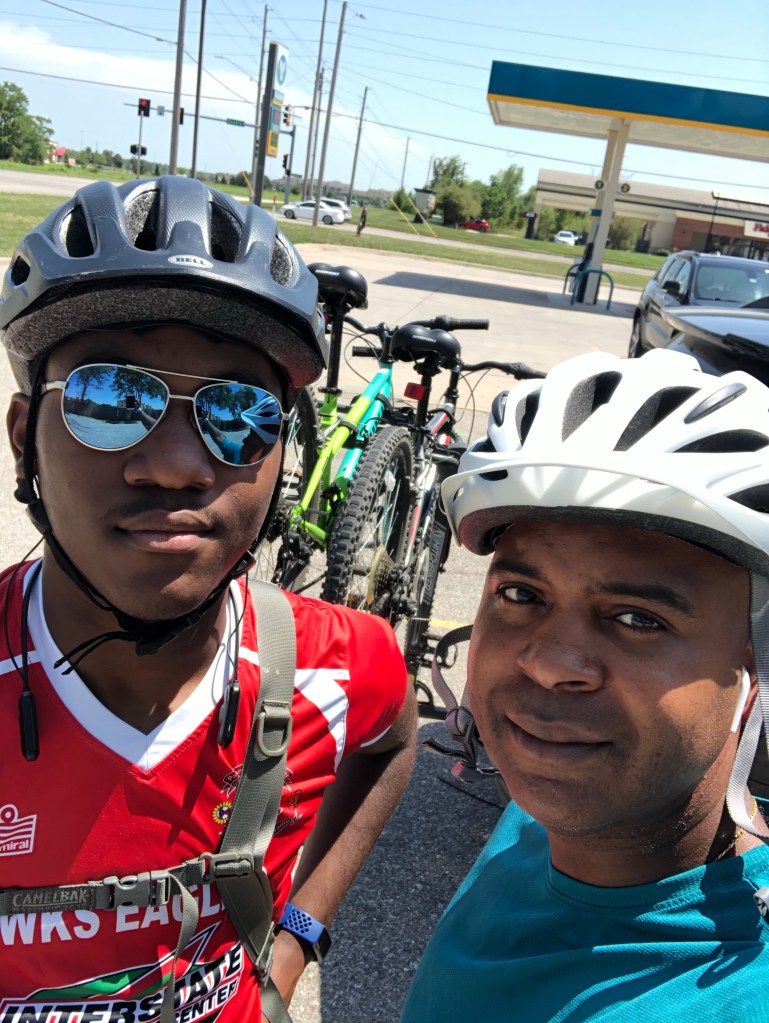
photo by Nalah Stokes

I recently had a conversation with a buddy about debt and credit cards. I told him that I do not use credit cards and have not used them for over a decade. He was shocked and asked how I did it? He wanted to know how I lived without credit cards? The short answer is, years ago I have made up my mind that I will not use credit cards to finance my life. Like my friend assumed, beginning to live a credit card free was not easy. In 2008, as gas prices started to rise, I struggled with maxed-out credit and to find a way to make ends meet. A family friend came to talk to us about a book and a program he’d heard about being debt-free. His excitement and enthusiasm about it got me excited. He shared his books and videos of the Total Money Makeover with us, and that kind act changed my life. Listening to Dave Ramsey helped me to see that living life on credit was hurting my ability to finance my life. From then on, I made every effort to only use cash and implement his methods of money management. So, with my buddy’s question, the cycle continues.

If you are familiar with Dave Ramsey’s baby steps, you are familiar with baby step 1 – Save $1,000 as a baby emergency fund. This is how we began to ween ourselves off of the use of credit cards. In the beginning, everything was an emergency, we were constantly revising our budget, and this baby emergency fund was in place to provide our family with a buffer between us and life.

My friend thought this was the coolest idea (I wished I could take credit for it) and went home to discuss it with his wife. About a month later he told me how much he valued my advice and began to tell me how having the baby emergency fund in place helped him to stay away from using his credit cards. “This has been a huge help for me,” he told me. He then continued to ask me for more financial advice.

In the grand scheme of things, $1,000 is not a lot of money. But when you are trying to get out and stay out, of debt, it could make a world of difference. That is exactly what it did for me and my family. Here’s an example of what I mean … Recently, my car window fell off the track… well a small tiny piece on the regulator broke. When I brought it to the dealer to get it fixed, they told me it would cost just north of $800 to repair. This time around, I just wrote the check and fixed my window (after price checking and looking for discounts, of course). Twelve years ago, my Chevy Malibu needed a repair, which would have cost $1,000. Given my shocked state of mind and my lack of resources, The dealer convinced me that the car was not safe to drive and to use my car as a down payment on a new car. Fully loaded complete with a car payment of $500 per month. If I had this $1,000 in place then, I could have just paid for the repair instead of being talked into a new car. When you know better, you do better. Today, the baby emergency fund allowed me to stick to my conviction of not using credit.

So, why do you need this $1,000 starter emergency fund? Because life happens and I can truly say that most household emergencies in my home were, and still are, less than $1,000. I believe that the worst time to accumulate more debt is when you are going through a hard time. Dave even suggests a $500 fund if $1,000 seems too big of a challenge; you have to start somewhere. Maintaining this small amount in your bank account provides a bit of space to allow you to pay off credit card debt without adding more. $1,000 allows you the financial freedom to pay that speeding ticket, small appliance repairs, blown tire, or your kid’s school thing that you forgot to budget for but can’t ignore. $1,000 give you a slice of peace.

There is one thing to remember about maintaining this baby emergency fund, though. Having it in place is great! But when you use it the priority, after the emergency is over, is to rebuild your emergency fund so it is there to use the next time you have an emergency.

To my friend trying not to rely so heavily on credit cards, I say take the plunge! Cut them up and close them. $1,000 is just the beginning. With zero debt, growing your baby emergency fund into a fully-funded emergency fund will be a piece of cake!

“The goal of an emergency fund is to give you peace of mind when something happens” – Chris Hogan –

5 Tips for Finding Financial Peace

Robert Kiyosaki describes the financial problems of our time as “being caught in a rat race”. Every day we are running and striving to make great strides in our financial lives. As hard as we are running, however,  we ultimately end up in the same place that we started; our results not showing the amount of effort that we are putting in.  This is because we have all been lied to. We have been made to believe in this lie so heavily that it is engrained into our everyday lives, it is in our belief system. That lie is Debt.

Dave Ramsey asks his listeners and readers, can you imaging life without debt?  A student, without a loan?  A car, without a note?  A home, without a mortgage?  Can you picture going to make a purchase without using a credit card?  or going into a store and paying for the items in your cart with your bank account/cash.   Many of us cannot.   We live life with a notion of financial stability as making all of your minimum payments, and making them on time. It’s not until those payments start to cause us pain, that we start to see the effects of debt.

If I were to tell you that gaining financial peace is within your grasp and you can have it, would you believe me or  would you cling to the belief that you have to have debt in order to survive in life?   The truth is, financial peace is within your grasp and you can learn how to obtain it. The question is will you do what you need to do in order to get it?

Over a decade ago, I began my own financial journey. I was  determined to reach the picture of financial peace I had in my mind.  For years, I had bought into the lies and the myths about money. I had several credit cards, that I was making the minimum payments on, I had a student loan that was around for years, going form forbearance to forbearance, and a wonder of how to get by until the next payday.   This was not the financial peace that I sought.  What I was looking for was the ability to maneuver through my life, without worrying how I would afford it.  I wanted to buy a gift for my wife, or take my children to a movie without worrying if the rent check would not clear.  Financial peace for me meant, being able to afford the life that I wanted to live.  Today, I can honestly say I have reached financial peace.

How’d I get here, you ask?  It started with a quote from Abraham Lincoln.  “If I had 8 hours to cut down a tree, i’d spend the first 6 hours sharpening the saw.”  This quote is more commonly attributed to Author Stephen Covey in his book 7 Habits of Highly Effective people.  Habit 7 is Sharpen the saw!  Continuing to grow and develop myself has helped me to get to this point in my life.  Here is a few things that I learned about finding financial peace.

1.  What is your definition of Financial peace.

According to Cashcow, one definition of Financial Peace is being able to afford the lifestyle that you want to live.  In order to to live that life you must define it.    Chris Hogan, author of Retire Inspired, says you must dream in HD, and create a plan to get there.    On that journey to live out your plan, is where financial peace is found.

2.  Debt is Dumb

Dave Ramsey Asks a question to his audience that completely made sense in my head.  If I were to hire you, to fix your own financial life.  Would you continue doing the same thing as you are doing?  Probably not.   your first step would probably would be to eliminate debt, and increase savings.  So why then, is this the hardest thing to do.  Society thrives on debt.  If you ask anyone what is the number one resolution in the world, guaranteed they will say get out of debt.  So let’s start our financial journey there.  Get it in your mind now, that debt is dumb.  You don’t want or need debt.

3.  What happened to the cookie jar?

My grandmother had an actual cookie jar on top of the fridge where she would put cash “for a rainy day.”  Today, most people use credit cards/debt (if you really need to know why this is a bad idea, look at number 2 again).  I’m not suggesting going back to a physical cookie jar, but having a stock pile of cash around for a rainy day, is a great idea.  When you’re in debt and an emergency happens the last thing you want to do is go deeper into debt.  there a several notions of where your cookie jar should be, the bottom line, though, is you need to have one.

4. Have a map to your destination.

Today, when we set off on a trip, the first thing we do is set the address in the GPS so we can follow the route.  Winning with money takes the same types of strategy.  A GPS for your money is called a budget.  Just like you wouldn’t start a trip without a either a destination in mind or a map to get there, a month should not be started without a plan to help you meet your financial goals for that month.

5.  Take control of your Wealth building tools.

When I first read Robert Kiyosaki’s book,   I fell in love with his idea that your assists should be your wealth building tool.  But I didn’t like how he got there.  The concept, however, is great.  Chris Hogan, put’s it like this.  If you build enough wealth (earning at least an 11% return on investment), to where you can live on 6%,  you will never touch the principle.  Your assets at that point will be buying your wealth building tools and funding your life.  Before we get to that point though, our greatest wealth building tool isn’t currently working for us.  It is working for Visa, MasterCard, Discover, Wells Fargo, Bank of America, Salley Mae… etc.  If we can take back our biggest tool, then we can start to see and make a difference in our worlds.


Resources

7 Habits of highly effective people

Total money Make over

Rich Dad, Poor Dad

Retire inspired

Exercise: My Efforts, My Results

”Don’t compare your beginnings to someone else’s middle.” -Jon Acuff-

I remember serving at a Temporary Duty (TDY) location, and being curious of the fitness levels of the men and women around me. I mean, these guys and women were in beast mode while we were there! On one TDY, I asked a my roommate, who always seemed to be working out,  to give me some pointers. “All I do is push-ups and situ-ps” he told me.  “50 in the morning, 50 during lunch, and 50 before I go to bed”. To me, this guy looked like he spent hours in the gym, possibly bench pressing the entire rack.  There was no way all he did was push-up and sit-ups.  That was the day that I started my own 30-30-30 routine.   I did 3 sets of 30 reps of  3 exercises. I did this routine every morning for the remaining months.  By the end of my TDY, the routine was easier to do, however,  I did not come remotely close to becoming as ripped as my friend.  I continued the routines after my return home, But my body did not change, I wasn’t bulking up.  Of course, This discouraged me so,  I increased the number of reps and I did the sets more frequently (every hour on the hour).  Eventually ended up hurting my shoulder which caused me to stop.  The military doctors told me I was doing “too many push-ups.”  Through out this several year endeavor to bulk up, I didn’t seem to get as ripped as my friend was.

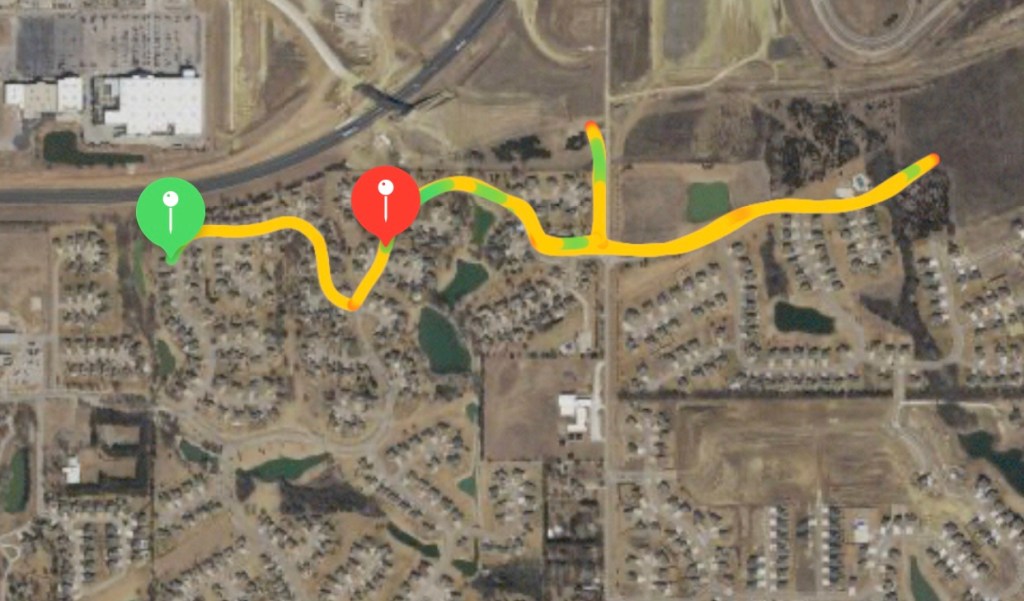
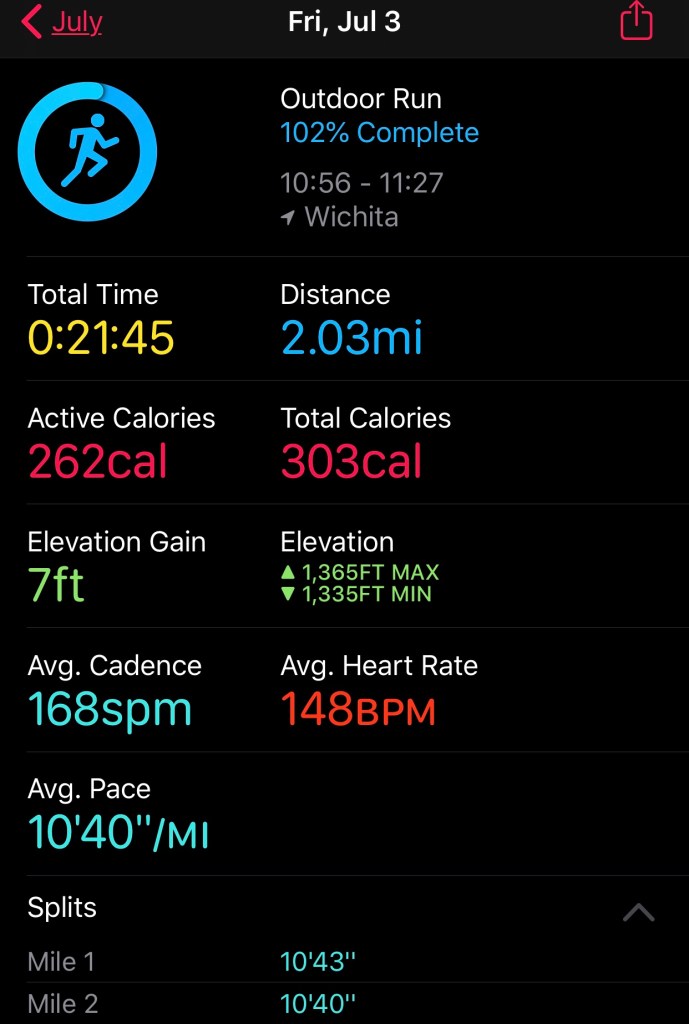
Hindered by my ability to do exercises that effected my shoulders, I started running more.  I would see other runners on the trail who made it look effortless.  In my mind, my runs, looked like a struggle.  In my ”Corey reality”, their easy stride, made their run seem doable for me.  I remember taking a team of Air Force Reserve Training Corp (ROTC) cadets to participate in the Air Force Marathon.  I saw a guy who looked to be about 4 times my size crossing the finish line of the 26.1 mile race.  This made me believe that I should be able to get up right then and run the entire race, twice.  On my very next run, I struggled to finish the first two miles of my run.

In both of these scenario I did just as many others do when they are starting a new endeavor.  I looked at what others where doing, and didn’t take into account their training, practice, and all of the other effort that they put in prior to me seeing them.  I compared my beginner efforts to their middle results.  At every step of the way,  because I could not get their results with my efforts, I felt discouraged and didn’t continue with my workouts.   I heard Dave Ramsey say,  after “30 years of hard work, suddenly I’m an overnight success.” This statement made me rethink how I viewed my results.  Here are some of the lessons that I have learned along the way:

  1.   Comparing the work I put in to the results of those around me will only serve to discourage me.  My wife said something that prompted an “Ah ha” moment in my mind.  She told me and our children, “you don’t know what someone else has been through to get where they are.”  I’ve learned to judge my results by the efforts that I put in.  I now look back and I realize, I am not where I started.  I no longer struggling to find time to exercise, it is a big part of my daily life.  I, also, able to run further distances and lift heavier weights.  All of the work that I’ve done over the months and years of training have gotten me here.  I learned to pat myself on the back and be proud at my own efforts and accomplishments.
  2. Workout for the person I am today.  One of the tools I use is the Nike Run Club app for my iPhone. During one training run, the coach said,  give 100% of the person you are today.  It took a while for the statement to sink in, but  I am not the person I was when I first started exercising. So his efforts are very different from the efforts that I put into a workout now.  I am also not the person I want to be.  His efforts will be different from what I can do today.  I have learned to remind myself of this every time I workout.
  3. Be careful with sharing.  I like to encourage people.  Everything I have learned on my journey has helped me get to where I am today and enjoy passing that information along.  But sharing my journey can also be the cause of someone else, not seeing my results from their efforts,  ending their journey. So I am careful about what I share and who I share with. I am always happy to give encouragement, but will always also encourage anyone to run their own race.  

One of the worst feelings in the world is being discouraged becasue I am not getitng the same results as someone else.  Every time, it has cause me to give up and not run my own race.  Throughout my journey I  have read books of ultra marathoners, and studied the workout plans of movie stars that have to bulk up quickly for a movie.  I, however, did not start seeing the success that I wanted until I started striving to reach my own goals, running my own race, and applauding my own efforts and my own result.