
We thought we knew how to budget. Every month we’d sit down at our kitchen table with our bills to fill in our trusty spreadsheet. We plugged in the numbers for each biller and creditor one by one. By the time my wife and I got paid and wrote checks, the month had already begun, and we had been spending money on life’s necessities as one would expect young parents to do. You know, things that were not on the budget sheet.
I’m writing this now to say that this was a time in my life when money and I were not seeing eye to eye. I wanted to hold on to my money but my money had other plans. And at the time, I simply didn’t understand how money works. It also goes without saying that my wife was not happy with my spending habits. Many of the fees we received for returned checks were higher than the cost of the bills that they were written for. I felt like this budgeting thing was not working for me! Something had to change. I had to get smart with my money
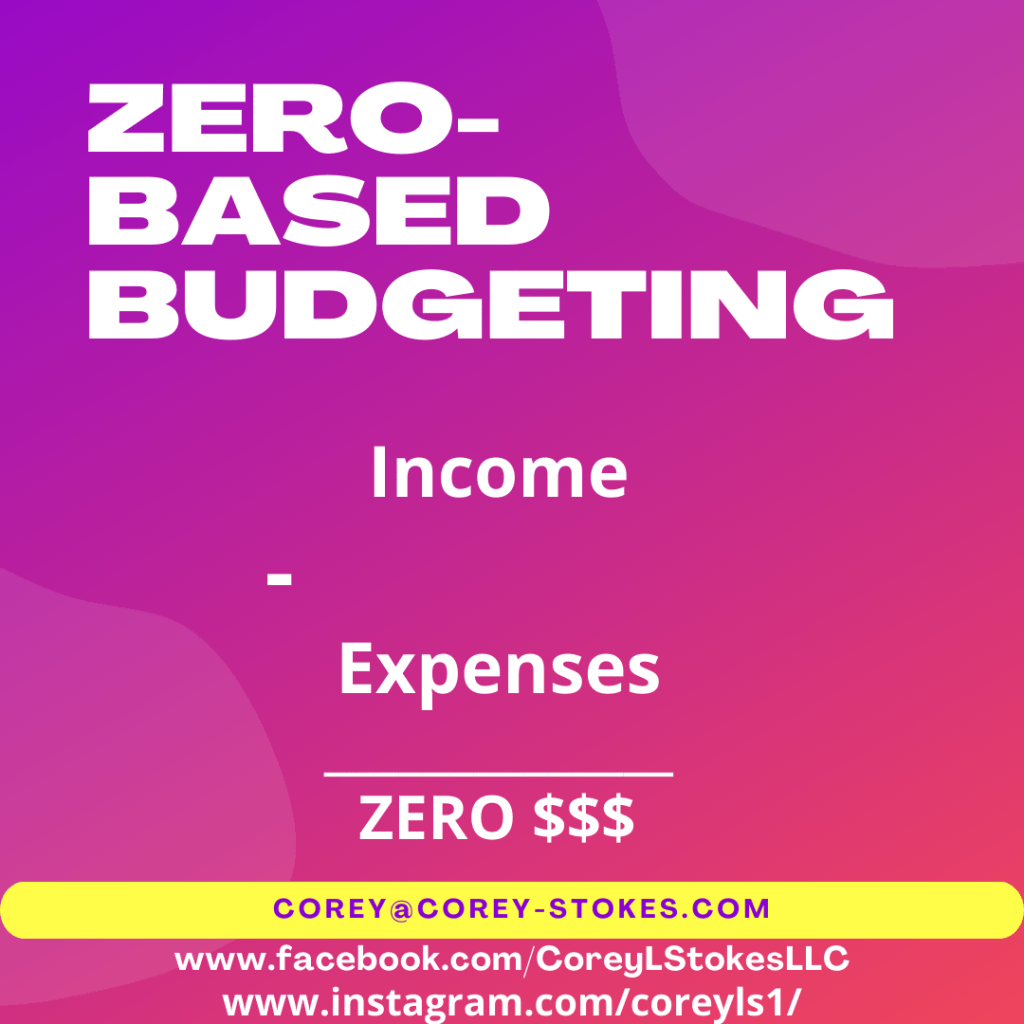
Fast forward a few years to 2021 and going on thirteen years of life with no credit cards, I was purging some old papers when I came across one of original budget sheets. Let me tell you, that spreadsheet made me cringe. While my current budget sheet could be described as overly complicated (I do love my spreadsheets – the more color the better.), it is far superior to my original. The new budget sheet starts with how much money we have and ends accounting for everything that we have to pay each month. This includes money for savings, eating out, streaming services, hair cuts, quarterly payments, and an allocation for surprises (looking back, it was the “surprise” purchases that got me all the time). Now, at the end of the budget sheet, there is always a zero balance. This means that we have successfully set a plan for every dollar that comes in for the month. Surprises are no more!
This is how we learned to budget
Dave Ramsey’s Total Money Makeover changed our perspective and how we looked at money. One of my wife’s coworkers and friends, (hey, Rodney), came by the house excited about information that he was learning through Financial Peace meetings at his church. He was “fired up” as Dave would say. He loaned us his copy of Dave’s book and we began reading while on a long road trip to Virginia. The book spoke of a way to manage your money, get out of debt, and still living a fulfilling and rich life debt and credit card free. It was way to look at money that, to my knowledge, no one in our circle was talking about. Up to this point, the most information that I had about managing my finances was the saying ” I had to getting my money right”. While everyone was getting their money right, no one was sharing how to do that! Publicly talking about money wasn’t really something that was encouraged in my circle and I wasn’t comfortable asking about it.
My wife and I read Dave’s book from cover to cover and decided then that we were finally going to get our money right. The difference was now we had clear and simple guide from Dave. That was in 2007. It is now 2021 and we have lived credit card free ever since. We did not get it right immediately, but budgeting eventually became our way of life.
As with most things, we learned from each of our mistakes along the way. My wife and I like to say that we didn’t learn hard lessons, we learned expensive ones. One example of this is the time we traded in our car. We let the dealer talk us into a 5-year car note in order to fix a $1,000 problem. It was not being prepared for these types of scenarios that hurt us badly. A few weeks ago, my daughter’s car needed an expensive repair (I’ll probably talk about that in a later post). This time around however, instead of letting the dealership talk me into yet another loan, I paid to have the car fixed. In retrospect, the good thing about those lessons was that we’d never make them again.
I’m going to stop here for now, but stay tuned for some of the lessons that we learned from our journey.
Resources
For a list of recommended books to read to build your financial education check out my post titled “Sharpening the Saw: Develop your own Financial Education plan.”
Here is a simple budget sheet that you can use to start budgeting properly. Remember, start with your income for the month. On the budget sheet, include the expenses for that month. the balance at the bottom of the sheet should be zero. If you have money left, congratulations you have a surplus. but that towards building your beginner emergency fund or to pay off debt. If you are in the negative, either sell something to make up the difference or something is not getting paid for that month.
Books that should be on your reading list
These are 3 of the books that have impacted me during the first few months of my learning process



 Corey Stokes
You must be logged in to post a comment.