
If you know anything about me, then you know I am all about learning from those that have done it before. This is why for this experience, I looked to a craft mead book. This is my 3 batch, but second attempt at making a mead. I haven’t made everything in the book yet. But the journey is still young. The book listed several different types of meads all of which sound amazing. Since, however, my initial fascination with brewing was with brewing beer, I was intrigued with the mead ale. A mead that was labeled as a beer, and that would not take a full year to be drinkable.
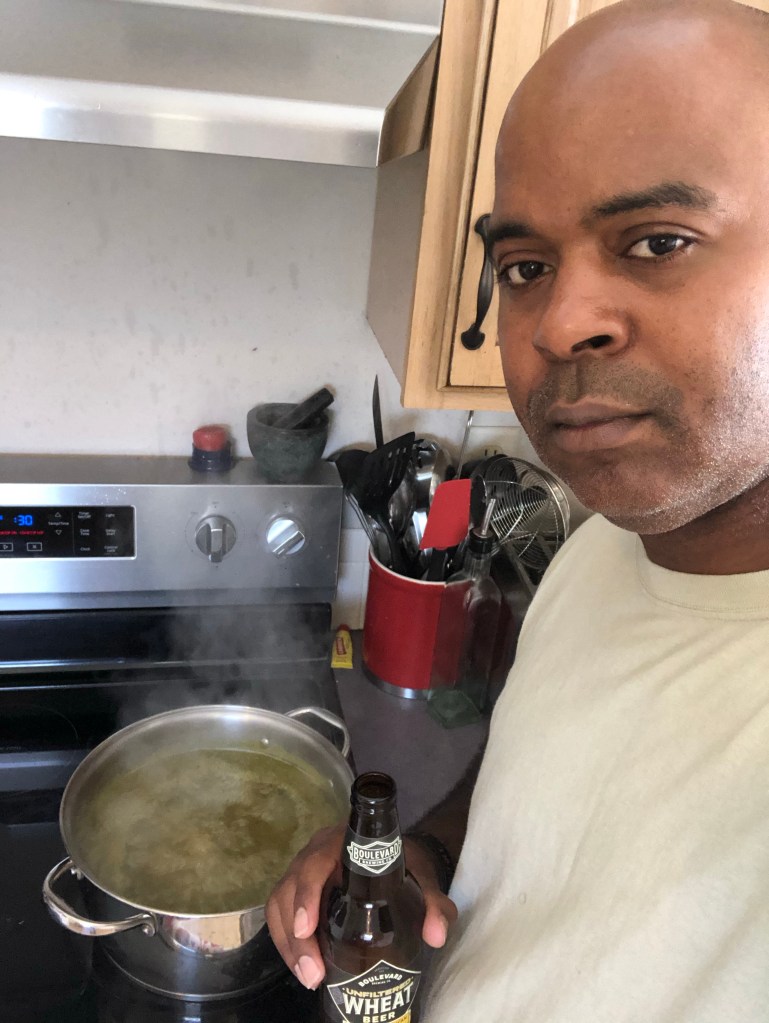
While brewing, my wife noted that she definitely did not like the smell of hops. So the next time I do anything with hops, I will have to go outside. The good news is, I get to break out my camp stove that has been in storage for the last few years.
Although I did get some grief from one of the Facebook groups when I posted about it, this experience was still fun for me. People made comments about this just being a hoppy mead, and not really a beer. While others made comments about me needing a new wife. Well, I never claimed it was a beer, it is described as a mead brewed like beer. Also, I kind of like my wife, so I think I’ll keep her.
This recipe called for honey, hops, water, citric acid, and yeast. While most meads take the better part of a year to be ready for drinking, this mead ale would only to take 1-3 months. Very exciting!
I started brewing this in June, Around the same time that I racked each of my other meads. While it was fermenting, there were several things that I needed in order to be finished with this ale. First I would need bottles to bottle it. Next, I needed to cap the bottles, so the gases would not escape during carbonation.
I found a local brewing store only a few miles from my house. The store clerk was able to answer all of my questions without making me feel like an idiot! She said reusing beer bottles, but with new caps would.be acceptable. So that is what I did. She was so helpful in fact, I went back to get her help several more times for other projects.
Capping
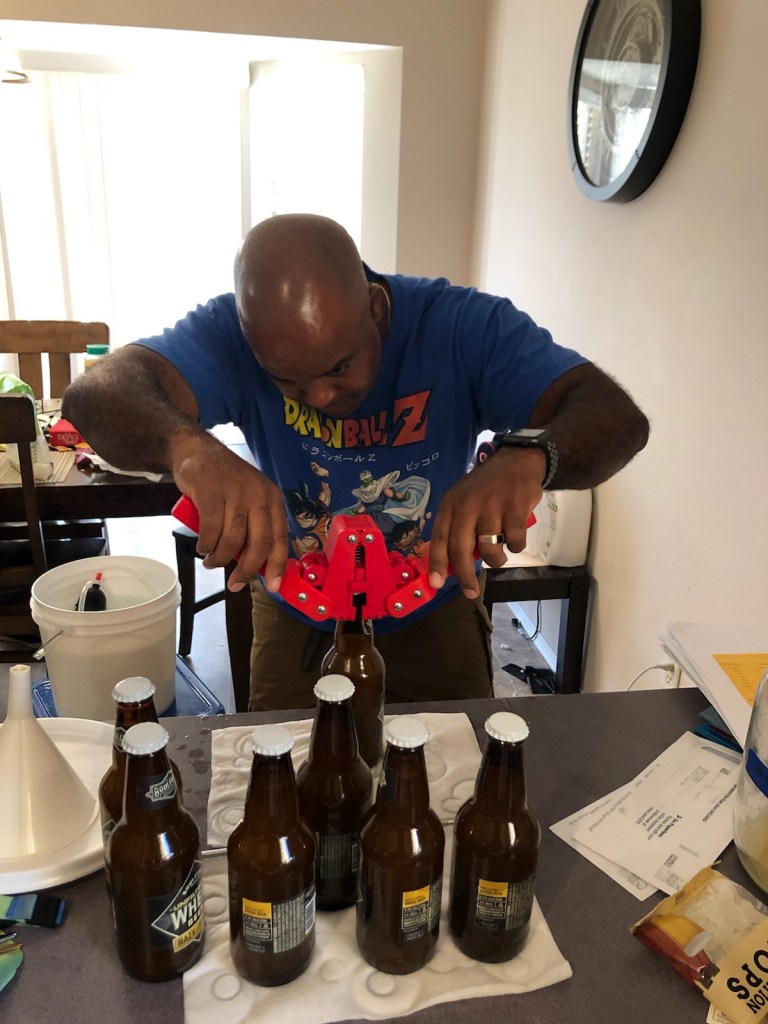
The capping process did not go particularly well. I went through way more caps than I needed to, I spilled one bottle of the ale, and I should have used at least one plastic bottle. Now, I have no way of testing the for combination (more on that in my combination post).
Once I finally got the caps on properly I set the ale in my garage (a warm area) for 3 days, then moved them to my basement (a cool area) for a few weeks to carbonate.
Tasting
I promised that I would keep these post short, so this one will be continued. I think I’ll let this ale continue carbonation for another week. The carbonating process was interesting and not at all as the book suggested. But I’ll discuss that during my next post.
 Corey Stokes
You must be logged in to post a comment.